
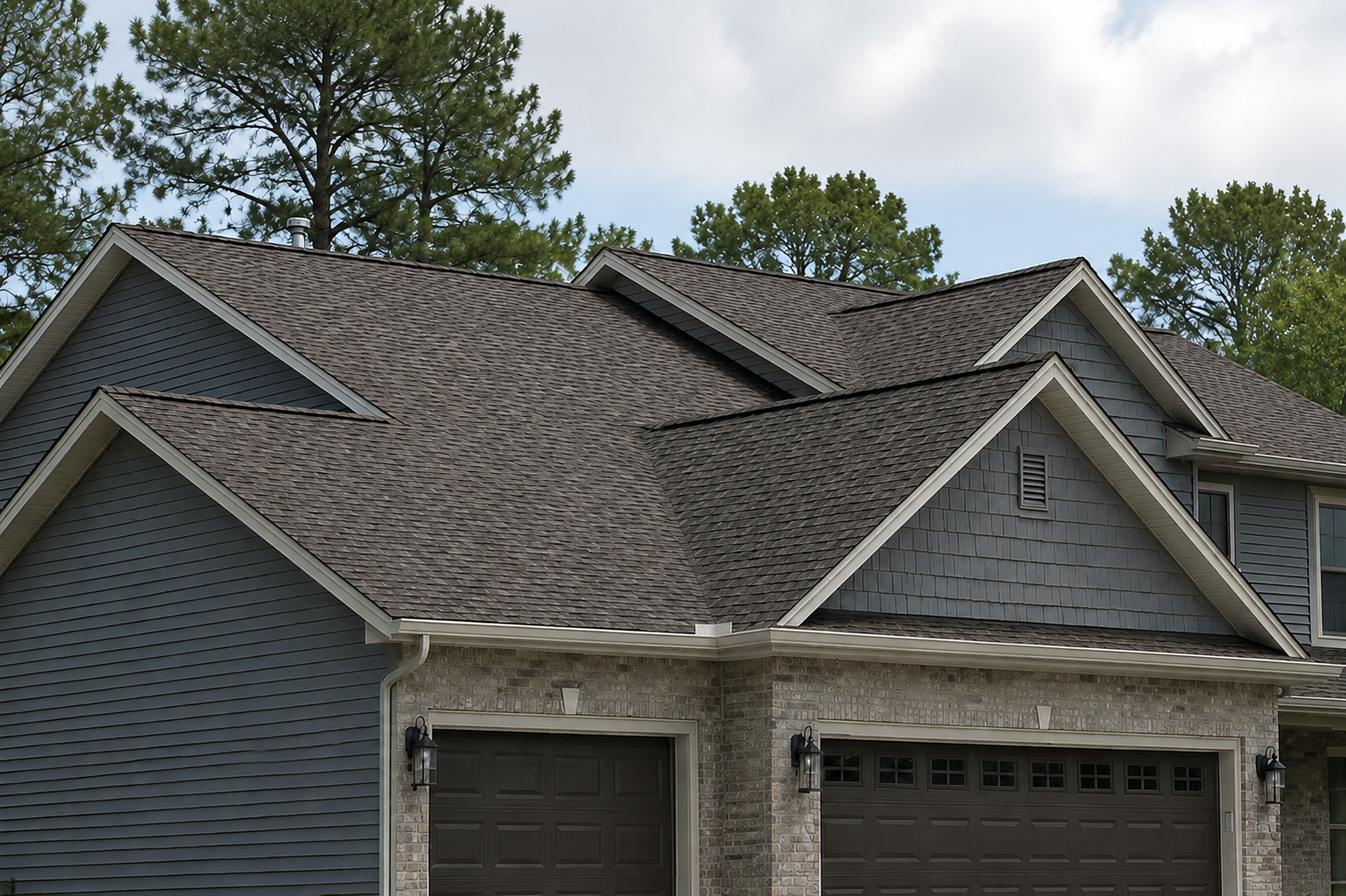
Most architectural shingle roofs in North Carolina last 25 to 30 years, so the clearest answer is this: replace your roof when it is approaching that age and showing wear you can see, like curling shingles, granules in the gutters, or water stains after storms. Repair still makes sense for isolated damage on a younger roof; age plus widespread wear means replacement.
That is the short version. The full answer depends on what material is over your head, how well the roof was installed, and what North Carolina’s climate has done to it since. This guide from the team at Forge Construction Group covers roof replacement timing for Triangle homeowners: how long each material actually lasts, the signs that matter, and when a repair is still the honest recommendation.
How Long Do Roofs Last in North Carolina?
Material sets the ceiling. Architectural asphalt shingles typically last 25 to 30 years in the Triangle’s climate. Premium systems play a different game: standing seam metal and synthetic slate are engineered to last 50 years or more.
Installation sets whether the roof reaches that ceiling. Proper installation, attic ventilation, and flashing make a bigger difference in lifespan than most homeowners expect. A well-installed shingle roof can serve its full 30 years; a poorly ventilated one can cook itself a decade early from underneath. This is why two same-age roofs on the same street can be in completely different condition.
If your home still wears its original roof and it was built in the 1990s or earlier, you are not asking whether replacement is coming. You are asking whether it is this year or one of the next few, and that is exactly the window where planning beats reacting.
What Are the Signs a Roof Is Done?
No single sign settles it, but these are the ones that matter, roughly in the order homeowners notice them:
- Granules collecting in gutters and downspouts. Shingles shed their protective surface as they age; heavy granule loss means the mat underneath is now taking the UV directly.
- Curling, cupping, or cracked shingles. Once shingles lose flexibility, they stop sealing and start failing in every storm.
- Missing shingles or tabs after routine storms. A healthy roof holds through ordinary Triangle weather; one that sheds shingles in every thunderstorm has lost its grip.
- Water stains on ceilings or in the attic. By the time a leak shows inside, water has usually been in the roof system for a while.
- Daylight visible in the attic. Light through the decking means water gets through too.
- A sagging roofline. Sag suggests decking or structural trouble underneath, which moves the conversation past shingles entirely.
- Age. Past 20 years, any of the signs above carries more weight, because the roof has less margin left.
One or two of these on a younger roof usually points to a repair. Several of them on a roof past 20 years points to replacement, and waiting mostly means paying for interior damage on top of the roof.
When Does Repair Still Make Sense?
An honest roofer repairs more roofs than they replace. Repair is the right call when the damage is isolated and the roof has life left: a few shingles lost to one wind event, a flashing failure around a chimney or valley, a puncture from a falling limb. Flashing in particular fails long before good shingles do, and re-flashing a solid roof is routine work, not a replacement conversation.
Replacement becomes the right call when damage is widespread rather than local, when repairs start recurring in different spots (each new leak is the roof telling you the whole system is at the end), or when an aging roof takes storm damage and putting new patches on failing shingles would waste the repair money twice.
Why North Carolina Is Hard on Roofs
The Triangle’s climate works a roof from every direction. Long, humid summers cycle shingles through heat expansion daily, and that heat load is exactly why attic ventilation shows up so often in lifespan conversations. Thunderstorm season brings wind and hail every year, and the remnants of tropical systems periodically test every fastener on the roof. Then there is the tree canopy that makes neighborhoods like Durham’s so desirable: shade, dropped limbs, and debris that holds moisture against the shingles all age a roof faster than the same roof would age on a bare lot. The 25-to-30-year lifespan is real here, but North Carolina roofs earn every year of it.
What About Storm Damage and Insurance?
Insurance changes the timing question. Policies generally cover sudden storm damage, like wind and hail, rather than gradual wear, so a storm-damaged roof is a claims conversation, not a savings conversation. The order of operations matters: document first, repair second. When storms damage a roof, Forge documents the damage, works directly with your insurance adjuster, and rebuilds the roof correctly, managing the restoration process from first inspection through final installation. If a major storm has just come through, get the roof inspected even if nothing is visibly wrong from the ground; hail damage in particular is easy to miss and time-limited to claim.
How Forge Replaces a Roof
Forge Construction Group is a licensed North Carolina general contractor (License #102873) serving Durham and the greater Triangle. A replacement starts with an inspection and a detailed, fixed scope, so you know the full investment before work begins, including what happens if tear-off reveals decking that needs attention. The install itself moves fast: most residential replacements take one to three days of on-site work once materials arrive, with landscaping protected through tear-off and the site cleaned daily. Every roof is installed to manufacturer specification and managed start to finish by one accountable team, whether it is architectural shingle or a 50-year premium system.
Frequently Asked Questions
Will homeowners insurance pay to replace my roof? If the cause is sudden storm damage like wind or hail, generally yes, subject to your policy. Insurance does not cover a roof that simply wore out. That line is exactly why documentation matters: Forge documents storm damage and works directly with your adjuster so the claim reflects what actually happened.
Does a roof that is not leaking still need replacing? Sometimes, yes. Leaks are a late-stage symptom; shingles lose granules, crack, and stop sealing well before water shows up on a ceiling. Replacing a spent roof before it leaks means you are paying for a roof, not a roof plus interior repairs.
How many layers of shingles can a roof have in North Carolina? Building code generally allows up to two layers of asphalt shingles, but Forge recommends a full tear-off. Tear-off is the only way to inspect the decking underneath, and it is what lets a new roof be installed flat, sealed, and to manufacturer specification.
Do black streaks on shingles mean the roof is failing? Usually not. Dark streaks are typically algae, common in North Carolina’s humidity, and are a cosmetic issue. Widespread granule loss, curling, or bald spots are different: those are wear, not staining, and worth an inspection.
What happens if I wait too long to replace a roof? The roof stops protecting the house and the bill grows. Water that gets past failing shingles rots decking, stains ceilings, ruins insulation, and invites mold, so the eventual project becomes roof plus repairs. Waiting also surrenders the timing: an emergency replacement happens on the calendar’s terms, not yours.
Does a new roof come with a warranty? A new roof carries two: the manufacturer’s warranty on the materials and the installer’s on the workmanship. Installing to manufacturer specification is what keeps the material warranty intact, which is one more reason installation quality matters more than the brand on the shingle wrapper.
How should we prepare for a roof replacement? Very little is required. Move vehicles out of the driveway, plan around one to three days of real noise, and take fragile items off walls that share framing with the roof, since tear-off vibrates the structure. Forge protects landscaping and exterior features and leaves the site clean each day.
Not sure which side of the repair-or-replace line your roof is on? Request an inspection and you’ll get an honest answer with a fixed scope, not a sales pitch.